CO2 capture and storage project in the Comminges region
CapCO2mminges in brief


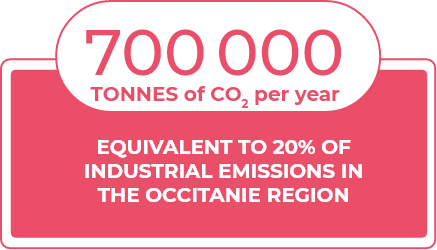
CapCO2mminges is an industrial decarbonisation project in the Pyrenean foothills, led by Lafarge Ciments, RTE and Teréga.

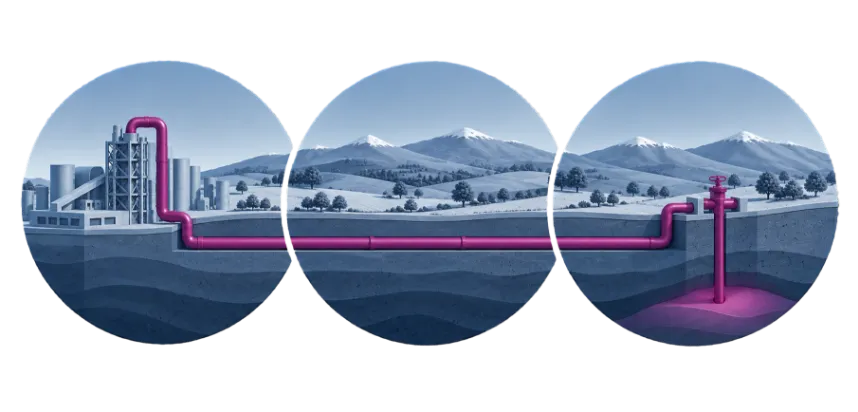
The project combines the capture of CO2 emissions from the Martres-Tolosane cement plant, their transport by pipeline, and their underground storage.

CapCO2mminges aims to complete the decarbonisation, already well underway, of a major industrial site in the Occitanie region, secure its long-term production, and create an onshore CO2 storage capacity.

CO2 capture and storage in the Comminges region addresses four complementary challenges:

Provisional
timeline

2025-2026

Preliminary studies and Exclusive Exploration Permit (EEP) application

Late 2026 – early 2027

Preliminary public consultation

2027 – 2029

Exploration Work Programme, additional studies and permitting and regulatory approvals

Early 2030

Final investment decisions

2030 – 2032

Works

2032

Commissioning
Questions and answers


What is CO2 capture and storage?

Capture involves collecting CO2 at source before it is released into the atmosphere, where it contributes to climate change. The CO2 can then be permanently stored underground. CO2 capture and storage is an essential solution for completing the decarbonisation of cement production. As part of CapCO2mminges, CO2 is captured from the Martres-Tolosane cement plant kiln exhaust, then transported by pipeline to an onshore storage site near Boulogne-sur-Gesse.

Why store CO2 in the Comminges region?

The subsurface of the Aquitaine Basin offers exceptional conditions for CO2 storage. This is particularly true of the geological formation considered as part of the CapCO2mminges project: a geological formation located at great depth (between 1,000 and 2,500 metres), offering significant storage capacity, ideal mineralogical characteristics, and a natural, impermeable caprock providing an effective seal. In addition to these geological advantages, the site is located just 35 kilometres from the Martres-Tolosane cement plant, making it possible to develop a local, integrated decarbonisation project.

What is an Exclusive Exploration Permit (EEP)?

An Exclusive Exploration Permit (EEP) is an administrative authorisation, provided for under the French Mining Code, that is required to explore subsurface resources. For CapCO2mminges, the ‘Haut CO2mminges’ PER application was submitted in August 2025, with a decision expected by November 2026. The permit will make it possible to assess the suitability of the Mondilhan geological structure under study for CO2 storage. If its storage potential is confirmed, further administrative authorisations will be required before industrial operations can begin.

Has the CapCO2mminges project been approved?

No. The project is currently at the preliminary studies stage, and a public consultation process is due to take place shortly. A final investment decision is expected in 2030, subject to the successful outcome of the EEP process and the necessary regulatory approvals being obtained. Commissioning is envisaged for 2032.

What is the cost of the project?

CapCO2mminges represents a total investment of more than €600 million. The project benefits from European support through the European Innovation Fund.

What are the potential effects?

CapCO2mminges uses CO2 capture and storage to decarbonise and secure the long-term future of the Martres-Tolosane cement plant. The project would also strengthen the area’s industrial attractiveness. Its local impacts, particularly those associated with construction works, the underground pipeline and underground CO₂ storage, will be assessed through forthcoming studies and presented as part of the public consultation process.

Scroll to Top